
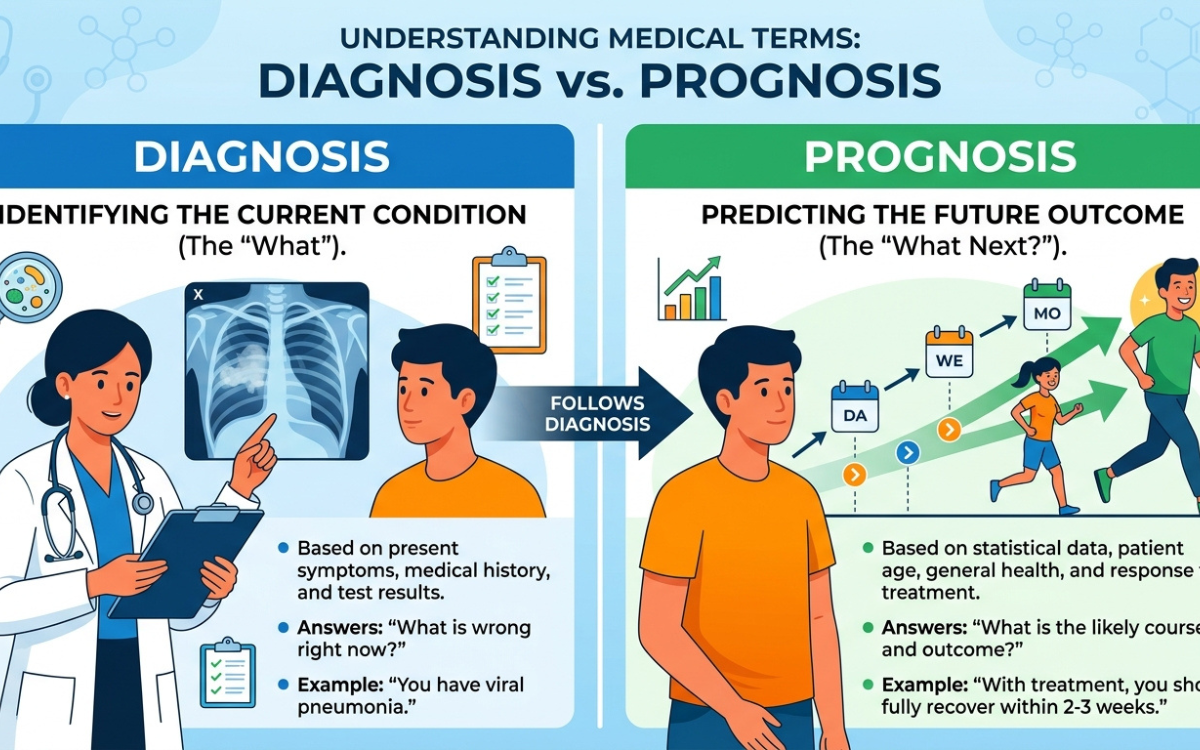
Medical language can sometimes feel confusing, especially when two terms sound closely connected but have completely different meanings. The Difference in prognosis and diagnosis is one of the most common areas of confusion for patients, caregivers, and even students entering healthcare fields. Diagnosis identifies what condition a person has, while prognosis explains what may happen after that condition is identified.
Understanding these concepts helps people communicate better with healthcare professionals, interpret medical reports, and make informed decisions about treatment options. A diagnosis answers the question, “What is happening?” A prognosis answers, “What can we expect in the future?”
These terms work together, but they serve different purposes. Knowing the difference can reduce anxiety because it separates the certainty of identifying a disease from the uncertainty of predicting its outcome.
What Is the Difference in prognosis and diagnosis?
The Difference in prognosis and diagnosis becomes clear when you understand the role each term plays in medicine. A diagnosis is the process of identifying a disease, disorder, or health condition based on symptoms, medical history, physical examinations, laboratory tests, imaging studies, and other clinical evidence.
For example, if a patient experiences chest pain, shortness of breath, and abnormal heart test results, a doctor may diagnose coronary artery disease. The diagnosis gives a name to the medical problem.
A prognosis, on the other hand, is a medical prediction about the likely course and outcome of that diagnosed condition. It considers factors such as:
- The severity of the illness
- The patient’s age and overall health
- Response to treatment
- Lifestyle factors
- Available medical therapies
- Possible complications
A doctor may diagnose the same disease in two different patients but provide different prognoses because each person’s situation is unique.
Diagnosis Explained: Identifying the Medical Condition
Diagnosis is the foundation of medical care. Without an accurate diagnosis, doctors cannot choose the most appropriate treatment plan.
The diagnostic process usually includes several steps:
1. Reviewing symptoms and medical history
Doctors begin by listening carefully to a patient’s symptoms. Details such as when symptoms started, how they have changed, and what makes them better or worse can provide important clues.
A medical history also includes previous illnesses, medications, family health conditions, and lifestyle information. These details help narrow down possible causes.
2. Performing physical examinations
A physical examination allows healthcare providers to look for signs of disease. Blood pressure changes, abnormal sounds, skin changes, swelling, or neurological responses may all provide diagnostic information.
3. Ordering diagnostic tests
Modern medicine relies heavily on testing methods such as:
- Blood tests
- X-rays
- MRI scans
- CT scans
- Ultrasounds
- Biopsies
- Genetic testing
These tools provide evidence that supports or rules out possible conditions.
4. Confirming or refining the diagnosis
Sometimes diagnosis is straightforward. Other times, doctors must investigate several possibilities before reaching a conclusion. Some conditions share similar symptoms, making accurate identification challenging.
A correct diagnosis is essential because incorrect identification of a disease can lead to ineffective treatment or unnecessary procedures.
Prognosis Explained: Predicting the Possible Future
A prognosis does not describe what is happening right now. Instead, it describes what may happen over time.
The Difference in prognosis and diagnosis is especially important because patients often mistake a prognosis for a guaranteed outcome. However, prognosis is an educated prediction, not a fixed future.
For example, a doctor may diagnose early-stage cancer and explain that the prognosis is favorable because the disease was detected early and responds well to treatment. Another patient with the same cancer type may have a different prognosis because the cancer has spread or because other health conditions affect recovery.
Doctors often describe prognosis using terms such as:
- Excellent prognosis: The condition is likely to respond well to treatment.
- Good prognosis: Recovery or control of the condition is expected with proper care.
- Guarded prognosis: The outcome is uncertain and depends on multiple factors.
- Poor prognosis: The condition may be difficult to treat or may involve serious complications.
Why the Difference in prognosis and diagnosis Matters for Patients
Understanding the Difference in prognosis and diagnosis helps patients ask better questions and avoid misunderstandings.
A diagnosis may sound frightening, but it does not always indicate the final outcome. Many diseases have different stages, treatment responses, and survival rates.
A prognosis provides additional context by explaining possible outcomes. It helps patients understand:
- What treatments may achieve
- What challenges they may face
- What lifestyle changes could improve outcomes
- What monitoring may be necessary
Patients should remember that prognosis can change. New treatments, improved health habits, and early intervention can influence future results.
Difference in prognosis and diagnosis: A Side-by-Side Comparison
| Feature | Diagnosis | Prognosis |
|---|---|---|
| Main purpose | Identifies a disease or condition | Predicts likely future outcome |
| Main question answered | “What is wrong?” | “What may happen next?” |
| Based on | Symptoms, tests, examinations | Diagnosis, research, patient factors |
| Timing | Usually occurs first | Usually follows diagnosis |
| Certainty level | Often based on evidence and confirmation | A prediction with some uncertainty |
| Example | Diagnosing diabetes | Predicting diabetes management outcomes |
This comparison highlights why both concepts are necessary. A diagnosis without prognosis may leave patients unsure about what comes next. A prognosis without diagnosis would lack a medical foundation.
How Doctors Use the Difference in prognosis and diagnosis in Treatment Planning
Healthcare decisions depend on both identifying the condition and understanding its possible progression.
A diagnosis guides the immediate treatment approach. For instance, antibiotics may be prescribed for a confirmed bacterial infection, while surgery may be considered for certain structural problems.
The prognosis helps doctors and patients evaluate long-term decisions. It can influence:
- Treatment intensity
- Follow-up schedules
- Rehabilitation plans
- Preventive measures
- Quality-of-life discussions
For serious illnesses, prognosis discussions are often part of shared decision-making. Doctors consider medical evidence while also respecting the patient’s personal goals and preferences.
Factors That Influence Prognosis After Diagnosis
Many factors can affect a person’s prognosis. The same diagnosis can produce different outcomes among different individuals.
Important factors include:
Disease stage
Early detection often improves outcomes because treatment can begin before a condition becomes more advanced.
Patient health status
A person’s immune system, nutrition, activity level, and existing medical conditions can influence recovery.
Treatment response
Some individuals respond quickly to medication or therapy, while others may require alternative approaches.
Access to medical care
Regular monitoring, specialist support, and timely treatment can significantly affect outcomes.
Lifestyle choices
Healthy habits such as balanced nutrition, physical activity, avoiding harmful substances, and following medical advice may improve long-term health.
Common Misunderstandings About Prognosis and Diagnosis
Many people confuse these terms because both appear in medical conversations. The Difference in prognosis and diagnosis becomes easier to understand when you avoid these common mistakes.
Mistake 1: Thinking diagnosis means the outcome is fixed
A diagnosis identifies a condition. It does not automatically determine what will happen. Many diseases have a wide range of possible outcomes.
Mistake 2: Believing prognosis is a prediction with certainty
Doctors use available evidence to estimate outcomes, but medicine cannot predict every individual situation perfectly.
Mistake 3: Ignoring changes over time
A prognosis may improve or worsen depending on treatment success, disease progression, and personal health changes.
Mistake 4: Comparing two patients with the same diagnosis
Two people can have the same medical condition but completely different prognoses because their circumstances differ.
How Patients Can Discuss Diagnosis and Prognosis With Doctors
Good communication helps patients understand their medical situation. Instead of only asking, “Is it serious?” patients can ask more specific questions.
Useful questions include:
- What exactly is my diagnosis?
- How certain is the diagnosis?
- What factors affect my prognosis?
- What treatment options are available?
- What signs should I watch for?
- Can my prognosis change with treatment?
These questions encourage clearer conversations and help patients participate actively in healthcare decisions.
Why the Difference in prognosis and diagnosis Is Important in Modern Medicine
Modern healthcare is not only about identifying diseases. It is also about understanding individual outcomes and creating personalized care plans.
Advances in technology, precision medicine, and medical research have improved both diagnosis and prognosis. Genetic information, artificial intelligence tools, and advanced imaging methods allow doctors to understand diseases in greater detail.
However, human factors remain essential. A medical prediction must consider the person behind the diagnosis, not just statistics from research studies.
The Difference in prognosis and diagnosis reflects two connected but separate parts of healthcare: discovering the problem and planning for the future.
Frequently Asked Questions About the Difference in prognosis and diagnosis
1. What is the main difference between prognosis and diagnosis?
The main Difference in prognosis and diagnosis is that diagnosis identifies a disease or health condition, while prognosis predicts the likely future course and outcome of that condition. Diagnosis explains the present medical issue, whereas prognosis focuses on possible future results.
2. Can a diagnosis change over time?
Yes. A diagnosis can change if new symptoms appear, additional testing provides new information, or doctors discover that another condition better explains the patient’s health problems.
3. Is a prognosis always accurate?
No. A prognosis is a medical estimate based on available evidence. It can provide helpful guidance, but individual outcomes may differ because every patient responds differently to illness and treatment.
4. Can treatment improve a prognosis?
Yes. Early treatment, lifestyle improvements, medication, surgery, rehabilitation, and advances in medical care can sometimes improve a person’s expected outcome.
5. Why do doctors discuss prognosis after diagnosis?
Doctors discuss prognosis after diagnosis because patients need to understand what the condition may mean for their future. This information helps with treatment choices, planning, and realistic expectations.
Final Thoughts
The Difference in prognosis and diagnosis is a fundamental concept that helps people better understand medical information. Diagnosis identifies the condition affecting a person, while prognosis explains the possible path ahead.
If you receive a medical diagnosis, do not assume it defines your future. Ask questions, understand your treatment options, and discuss the factors that may influence your prognosis.
The best healthcare decisions happen when patients and doctors work together with accurate information, realistic expectations, and open communication.