
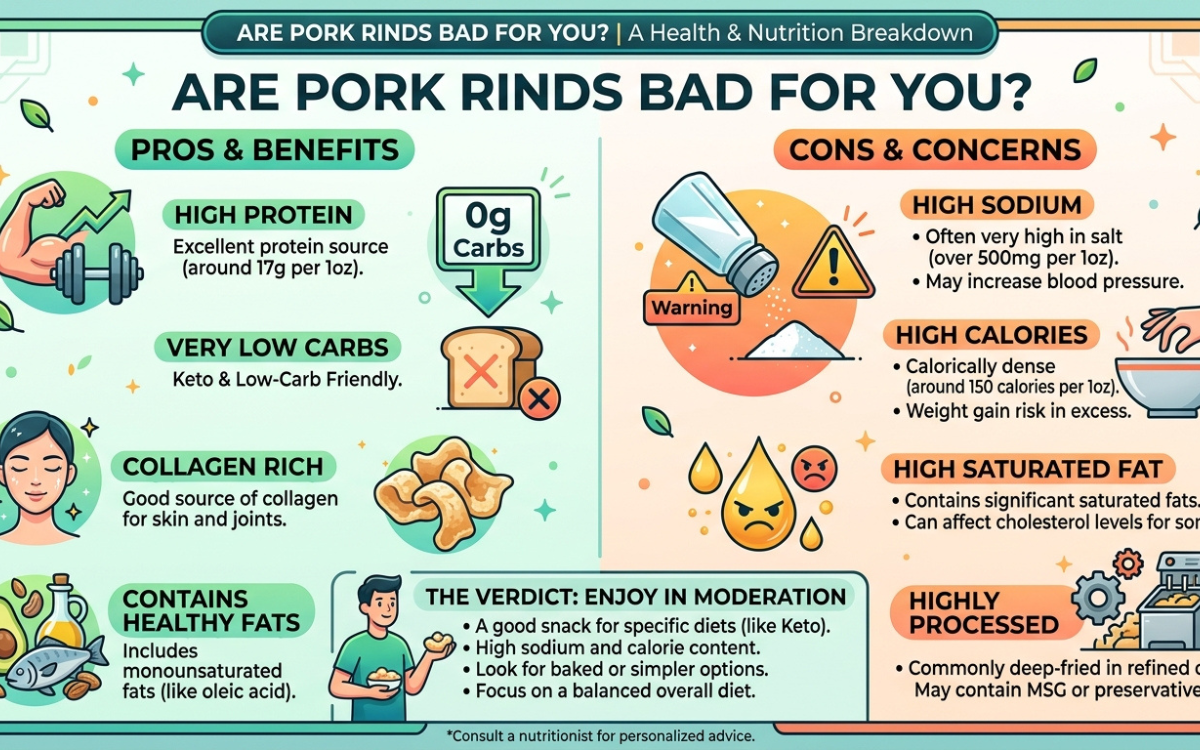
Are pork rinds bad for you? The answer depends on how often you eat them, your overall diet, and your individual health goals. Pork rinds are a popular crunchy snack made from pig skin that has been cooked, dried, and fried until it becomes light and crispy. They are naturally low in carbohydrates, high in protein, and often included in low-carb and ketogenic diets.
But calling them simply “healthy” or “unhealthy” misses the bigger picture. Pork rinds have some nutritional advantages, but they also contain factors that may make them a poor choice for certain people. Understanding their ingredients, preparation methods, sodium content, and place in a balanced eating pattern is the key.
Are pork rinds bad for you or can they fit into a healthy diet?
Many people wonder are pork rinds bad for you because they seem contradictory. They are a processed snack food, yet they contain protein and have almost no carbohydrates. The reality is more nuanced.
Traditional pork rinds are mostly made from pork skin and fat, with added salt and sometimes flavorings. Unlike potato chips or many crackers, they generally do not contain refined carbohydrates or added sugars. This makes them attractive to people following keto, carnivore, or low-carb eating plans.
However, nutritional value is not determined by one factor alone. A food can be low in carbs and still be something you should limit because of sodium, calories, or the way it fits into your overall eating habits.
A smarter question is not only are pork rinds bad for you, but also:
- How large are your portions?
- Are you eating them instead of nutrient-rich foods?
- Do you have health conditions affected by sodium or saturated fat?
- Are they part of an otherwise balanced diet?
What are pork rinds made of?
Pork rinds begin as pig skin, which contains collagen, connective tissue, and varying amounts of fat. During processing, the skin is cooked to remove moisture and then fried or baked to create the crunchy texture people enjoy.
The basic ingredients are usually:
- Pork skin
- Salt
- Seasonings or flavor additives
- Sometimes additional oils or preservatives
The cooking process changes the texture dramatically. The final product is airy and crunchy because moisture has been removed and the skin expands during frying.
This simplicity is one reason some people prefer pork rinds over heavily processed snack foods with long ingredient lists.
Pork rinds nutrition facts: Are they actually healthy?
A typical serving of pork rinds, around 1 ounce (28 grams), may contain approximately:
- Protein: 7–9 grams
- Fat: 5–8 grams
- Carbohydrates: 0 grams
- Calories: 130–160 calories
- Sodium: 200–500+ milligrams depending on the brand
These numbers explain why pork rinds attract attention among people trying to reduce carbohydrates.
They provide protein and can help create a feeling of fullness. They are also naturally gluten-free, which makes them suitable for many people with gluten sensitivity.
Still, pork rinds are not a replacement for whole-food protein sources such as eggs, fish, poultry, beans, or lean meats. They lack important nutrients found in minimally processed foods, including fiber, vitamins, minerals, and plant compounds.
Are pork rinds bad for you if you eat them every day?
The concern increases when pork rinds become a daily habit rather than an occasional snack.
Eating a small serving occasionally is very different from regularly consuming large amounts. If someone eats multiple servings every day, they may increase their intake of:
- Sodium
- Saturated fat
- Calories
- Highly processed snack foods
For people asking are pork rinds bad for you, frequency matters. A snack that fits into a balanced diet can become less beneficial when it replaces vegetables, fruits, nuts, seeds, and other nutrient-dense foods.
A practical approach is to treat pork rinds like other snack foods: enjoy them occasionally, watch portions, and pair them with healthier choices.
Potential health benefits of pork rinds
Although pork rinds are not a superfood, they do have certain advantages.
1. Pork rinds are low in carbohydrates
One of the biggest reasons people choose pork rinds is their carbohydrate content. Many traditional snack foods contain significant amounts of starch from potatoes, corn, or grains.
For people following a ketogenic diet, pork rinds can provide a crunchy snack option without disrupting carbohydrate goals.
2. Pork rinds provide protein
Protein supports:
- Muscle maintenance
- Tissue repair
- Hormone production
- Increased feelings of fullness
Pork rinds are not the most complete protein source available, but they do contribute some protein to the diet.
3. Pork rinds can replace higher-carb snacks
For someone who would otherwise eat sugary chips, crackers, or processed snacks, switching to pork rinds may reduce carbohydrate intake.
The benefit comes from what they replace. A food choice should always be judged within the context of the entire diet.
Are pork rinds bad for your heart?
This is one of the most common concerns. Pork rinds contain saturated fat and sodium, two nutrients often discussed in relation to cardiovascular health.
Eating excessive amounts of saturated fat may contribute to higher LDL cholesterol levels in some individuals. High sodium intake can also be problematic for people who are sensitive to salt or who have certain blood pressure concerns.
That does not mean one serving of pork rinds automatically damages your heart. Diet quality depends on patterns over time.
If your diet already contains many processed foods, adding frequent servings of salty snacks may not be ideal. If your overall eating pattern includes vegetables, fiber-rich foods, healthy fats, and lean proteins, occasional pork rinds may fit.
Are pork rinds bad for weight loss?
Weight loss depends mainly on calorie balance, food quality, and consistency.
Pork rinds can support weight loss for some people because:
- They are crunchy and satisfying.
- They contain protein.
- They contain very few carbohydrates.
- They may reduce cravings for high-carb snacks.
But they are still calorie-dense. Eating large portions can easily add hundreds of calories without providing much fiber or micronutrients.
People often underestimate snack calories because crunchy foods are easy to eat quickly. Portion control is essential.
Are pork rinds bad for keto diets?
For many people following keto, pork rinds are considered a convenient snack because they contain virtually no carbohydrates.
They can be used as:
- A replacement for tortilla chips
- A crunchy topping for salads
- A coating alternative for low-carb recipes
- A snack alongside protein-rich foods
However, keto-friendly does not automatically mean healthy. A diet built mainly around processed meats and salty snacks may still lack important nutrients.
A strong ketogenic eating pattern usually emphasizes:
- Quality protein sources
- Low-carb vegetables
- Healthy fats
- Adequate minerals and hydration
Who should limit or avoid pork rinds?
The answer to are pork rinds bad for you changes depending on personal health circumstances.
People who may need to limit pork rinds include:
Individuals managing high blood pressure
Because many pork rind brands are high in sodium, frequent consumption may make sodium reduction harder.
People with heart disease concerns
Those advised to reduce saturated fat may want to choose snacks with more unsaturated fats, such as nuts or seeds.
People trying to improve gut health
Pork rinds contain little to no fiber. A diet lacking fiber may negatively affect digestion and gut bacteria.
Anyone relying heavily on processed snacks
Even low-carb snacks should not replace a variety of whole foods.
How to choose healthier pork rinds
If you enjoy pork rinds, a few simple strategies can make them a better choice.
Look for:
- Lower sodium varieties
- Short ingredient lists
- Products cooked with quality oils
- Brands without unnecessary additives
Also pay attention to serving sizes. A single bag may contain multiple servings, even if it looks like a personal snack.
Pairing pork rinds with nutrient-rich foods can also improve the overall meal or snack. For example, eating them with guacamole or a protein-rich dip may provide additional nutrients and healthy fats.
Are pork rinds bad for you compared with chips?
The comparison depends on what you value nutritionally.
Compared with many potato chips, pork rinds often have:
Advantages:
- Fewer carbohydrates
- More protein
- No added sugar
- Gluten-free options
Disadvantages:
- Often high in sodium
- Usually low in fiber
- Highly processed
- May contain significant saturated fat
Neither snack should be considered a replacement for whole foods. The better choice depends on your dietary needs.
Common myths about pork rinds
Myth: Pork rinds are completely unhealthy
This is too simplistic. Pork rinds can fit into certain diets when eaten in moderation.
Myth: Pork rinds are a health food
They are not. They are a processed snack with some nutritional benefits but also limitations.
Myth: Low-carb means unlimited
A food being keto-friendly does not mean portion sizes no longer matter.
Frequently Asked Questions About Are Pork Rinds Bad for You
1. Are pork rinds bad for cholesterol?
Pork rinds contain saturated fat, which may affect cholesterol levels differently depending on the person and overall diet. If you have high cholesterol or cardiovascular risk factors, discuss snack choices with a healthcare professional.
2. Are pork rinds healthier than potato chips?
Pork rinds may be lower in carbohydrates and higher in protein than potato chips, but they can also be high in sodium and lack fiber. Neither should replace nutrient-rich foods.
3. Can you eat pork rinds on a keto diet?
Yes. Many people include pork rinds in keto diets because they contain almost no carbohydrates. However, a healthy keto diet should still include vegetables, quality proteins, and nutrient-rich foods.
4. Are pork rinds bad for weight loss?
They can fit into a weight-loss plan if portions are controlled. Eating large amounts can add significant calories and may slow progress.
5. How often can you eat pork rinds?
There is no universal rule, but moderation is important. Occasional servings are generally easier to fit into a balanced diet than eating large amounts every day.
Final Thoughts: Are pork rinds bad for you?
So, are pork rinds bad for you? The honest answer is: it depends on your diet, health goals, and how often you eat them.
Pork rinds can be a useful low-carb snack with protein and a satisfying crunch. They may work well for people following keto or looking for alternatives to high-carbohydrate snacks.
At the same time, they are still a processed food. They are low in fiber, can be high in sodium, and should not replace vegetables, fruits, and other nutrient-dense foods.
The best approach is simple: enjoy pork rinds occasionally, choose better-quality options, control portions, and build the majority of your diet around whole foods. That balance is what supports long-term health.