
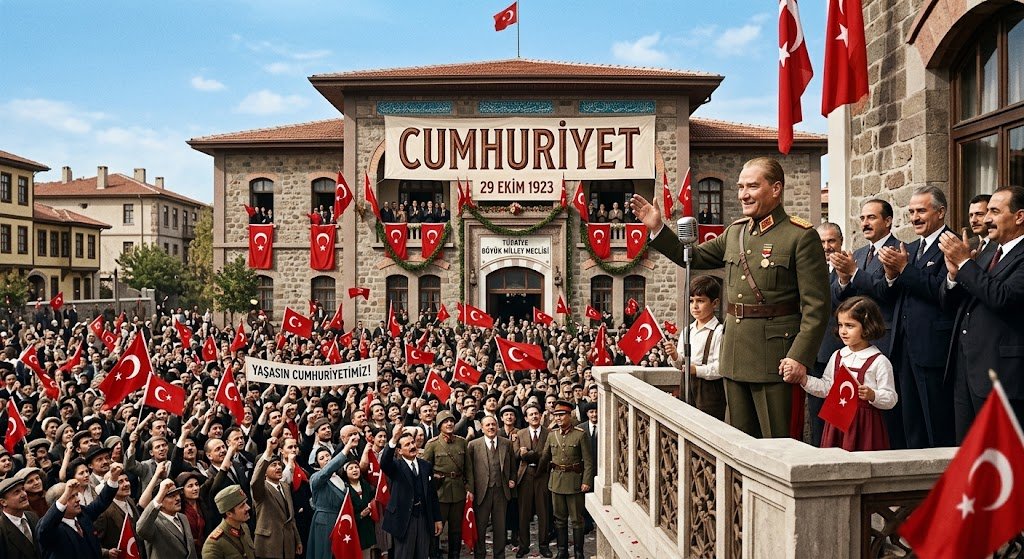
The word Cumhuriyet represents far more than a political system. It is a powerful symbol of transformation, independence, and national identity. In Turkey, Cumhuriyet refers specifically to the Turkish Republic, officially established on October 29, 1923, after the collapse of the Ottoman Empire and the victory of the Turkish War of Independence.
For many people, Cumhuriyet represents the beginning of a new era built around modernization, secular governance, national sovereignty, and institutional reform. It marked a dramatic shift from centuries of imperial rule toward a republic where political authority was transferred from a monarch to the people.
The story of Cumhuriyet is not only about the creation of a government. It is about a society rebuilding itself, redefining its values, and navigating the challenges of becoming a modern nation-state. From Mustafa Kemal Atatürk’s sweeping reforms to contemporary debates about democracy and identity, the Turkish Republic continues to influence millions of lives.
This comprehensive guide explores the origins, principles, reforms, cultural impact, and lasting significance of Cumhuriyet.
Table of Contents
ToggleWhat Does Cumhuriyet Mean?
The term Cumhuriyet comes from the Arabic-origin word “cumhur,” meaning “the public” or “the people.” In political language, it translates to republic, a system where sovereignty belongs to citizens rather than a hereditary ruler.
Unlike monarchies, where power traditionally passes through royal families, a republic is based on:
- Popular sovereignty
- Elected representation
- Constitutional governance
- Citizenship-based identity
In the Turkish context, Cumhuriyet carries a deeper historical meaning. It symbolizes the transition from the Ottoman Empire’s imperial structure to a modern Turkish state built around national independence.
The declaration of the republic was not simply a change in leadership. It represented a complete restructuring of political institutions, education, law, economy, and social life.
The Historical Background Behind Cumhuriyet
The Decline of the Ottoman Empire
To understand Cumhuriyet, it is essential to examine the conditions that existed before its creation.
For centuries, the Ottoman Empire was one of the world’s most powerful states. It controlled vast territories across Europe, Asia, and Africa. However, by the late 19th and early 20th centuries, the empire faced serious internal and external challenges.
Several factors contributed to its decline:
- Military defeats against European powers
- Economic difficulties
- Nationalist movements within Ottoman territories
- Political instability
- Pressure from expanding European influence
The empire’s defeat in World War I (1914–1918) became a turning point. The Ottoman government signed the Treaty of Sèvres in 1920, which proposed dividing much of Ottoman territory among foreign powers.
This created widespread resistance among Turkish nationalists.
The Turkish War of Independence and the Birth of Cumhuriyet
Mustafa Kemal Atatürk’s Leadership
The foundation of Cumhuriyet is closely connected to Mustafa Kemal Atatürk, a military commander and political leader who became the founder of modern Turkey.
After arriving in Anatolia in 1919, Atatürk organized a nationalist movement opposing foreign occupation and the authority of the Ottoman government.
The Turkish War of Independence lasted from 1919 to 1923 and resulted in the establishment of a new Turkish state.
Key milestones included:
- 1919: Atatürk begins the national resistance movement
- 1920: The Grand National Assembly is established in Ankara
- 1922: The Ottoman Sultanate is abolished
- 1923: The Treaty of Lausanne recognizes Turkey’s sovereignty
- October 29, 1923: The Republic of Turkey is officially declared
The creation of Cumhuriyet transformed Ankara into the political center of the new nation and ended centuries of Ottoman imperial rule.
Cumhuriyet and Atatürk’s Vision for Modern Turkey
The Six Principles of Kemalism
Atatürk developed a political philosophy known as Kemalism, which shaped the early years of Cumhuriyet.
The ideology was built around six major principles:
1. Republicanism (Cumhuriyetçilik)
Republicanism emphasized that political power belonged to the nation.
The government’s legitimacy came from citizens rather than monarchy or religious authority.
2. Nationalism (Milliyetçilik)
Turkish nationalism focused on creating a shared national identity among citizens of the new republic.
It aimed to replace imperial identity with a modern concept of Turkish citizenship.
3. Populism (Halkçılık)
Populism promoted equality among citizens and rejected privileges based on social class.
The idea was that the state should represent ordinary people.
4. Secularism (Laiklik)
One of the most significant reforms of Cumhuriyet was separating religion and state administration.
Secular reforms included:
- Ending the caliphate
- Reforming religious institutions
- Introducing secular legal systems
- Changing educational structures
5. Statism (Devletçilik)
Statism encouraged government involvement in economic development, especially during the early industrialization period.
6. Reformism (İnkılapçılık)
Reformism represented continuous modernization and adaptation.
It encouraged scientific progress, education, and institutional change.
Major Reforms Introduced During Cumhuriyet
Educational Transformation
Education became one of the central priorities of the new republic.
The government introduced reforms designed to create a modern education system based on science and national unity.
Important changes included:
- Expansion of public schools
- Adoption of modern curricula
- Unification of education systems
- Increased access to literacy programs
The 1928 Alphabet Reform, which replaced the Ottoman Turkish script with a Latin-based alphabet, became one of the most recognizable changes of the Cumhuriyet era.
The reform aimed to increase literacy and connect Turkey more closely with international scientific and cultural developments.
Legal and Social Changes Under Cumhuriyet
Modernizing the Legal System
The early republic replaced many Ottoman-era legal structures with modern European-inspired systems.
Major legal reforms included:
- Adoption of a civil code based on Swiss law
- Introduction of modern commercial regulations
- Reform of criminal law systems
These changes aimed to create equality before the law and establish a modern citizenship framework.
Women’s Rights and Social Progress
The development of women’s rights became a major part of the Cumhuriyet transformation.
Women gained important legal and political rights during the early republican period.
Major milestones included:
- Equal rights in civil matters
- The right to vote in local elections in 1930
- Full voting rights and eligibility for parliament in 1934
These reforms placed Turkey among the earlier countries to grant women national political rights.
The Cultural Impact of Cumhuriyet
Creating a New National Identity
The republic reshaped Turkish culture through language reform, historical research, architecture, arts, and education.
The government encouraged citizens to see themselves as members of a modern nation rather than subjects of an empire.
Cultural changes included:
- Promotion of Turkish language studies
- Development of national museums
- Expansion of universities
- Support for literature and arts
The concept of Cumhuriyet became closely associated with modernization and national progress.
Cumhuriyet Bayramı: Celebrating the Republic
Every year on October 29, Turkey celebrates Cumhuriyet Bayramı, or Republic Day.
The holiday commemorates the declaration of the Turkish Republic in 1923.
Celebrations typically include:
- Public ceremonies
- National speeches
- Concerts
- Fireworks
- Flag displays
For many citizens, Republic Day represents independence, national unity, and the achievements of the modern Turkish state.
Cumhuriyet in Modern Turkey
Political Developments and Debates
Over the decades, Cumhuriyet has continued evolving.
Turkey has experienced:
- Periods of democratic expansion
- Military interventions
- Constitutional changes
- Political debates about secularism and national identity
Different political groups have interpreted the meaning of the republic in different ways.
Some emphasize Atatürk’s principles of secular modernization, while others focus on cultural traditions and broader democratic participation.
These discussions demonstrate that Cumhuriyet remains an active and evolving concept rather than only a historical event.
Why Cumhuriyet Still Matters Today
The significance of Cumhuriyet extends beyond Turkey’s borders.
It represents a broader historical example of how societies transition from imperial systems to modern nation-states.
Key lessons from the republic’s history include:
- The importance of institutional reform
- The role of education in national development
- The relationship between tradition and modernization
- The challenges of building democratic systems
Understanding Cumhuriyet helps explain many aspects of Turkey’s current political, cultural, and social landscape.
Frequently Asked Questions About Cumhuriyet
What does Cumhuriyet mean in Turkish history?
Cumhuriyet means republic and refers specifically to the establishment of the Republic of Turkey in 1923. It represents the transition from Ottoman imperial rule to a modern nation-state based on national sovereignty.
When was Cumhuriyet officially established?
The Republic of Turkey, known as Cumhuriyet, was officially declared on October 29, 1923. Mustafa Kemal Atatürk became the first president of the new republic.
Who founded Cumhuriyet?
Mustafa Kemal Atatürk is recognized as the founder of the Turkish Republic. He led the independence movement and introduced major political, social, and economic reforms.
What are the main principles of Cumhuriyet?
The foundation of Cumhuriyet is based on republicanism, nationalism, populism, secularism, statism, and reformism. These principles shaped the early political structure of modern Turkey.
Why is October 29 important for Cumhuriyet?
October 29 is celebrated as Republic Day (Cumhuriyet Bayramı) because it marks the official declaration of the Turkish Republic in 1923. It is one of Turkey’s most important national holidays.
Conclusion: Understanding the Lasting Legacy of Cumhuriyet
Cumhuriyet is more than the name of a political system. It represents a historic transformation that changed Turkey’s government, society, education, culture, and national identity.
From the ashes of the Ottoman Empire, the republic created a new vision centered on independence, modernization, and citizenship. While debates about its meaning continue, the influence of Cumhuriyet remains deeply embedded in Turkish life.
To truly understand modern Turkey, start with its republican foundations. Explore the reforms, study the historical context, and examine how the principles of Cumhuriyet continue shaping the country today.